
East London has one of the highest concentrations of Houses in Multiple Occupation (HMOs) in England. Boroughs like Newham, Tower Hamlets, Hackney, Waltham Forest and Barking & Dagenham have active licensing and enforcement regimes. If you’re an HMO landlord, the electrical requirements go significantly further than for a standard single-let property. Getting them wrong can cost you your licence and expose you to substantial fines.
What counts as an HMO?
A property is classified as an HMO if it is occupied by three or more people who form two or more separate households and who share facilities such as a bathroom or kitchen. This covers bedsits, shared houses, and purpose-built HMOs. A mandatory licence is required for larger HMOs (five or more people in two or more households), but many East London councils operate additional licensing schemes that capture smaller properties too.
Check with your specific borough — Newham, Tower Hamlets, Hackney, Redbridge, and Waltham Forest all have borough-wide or area-specific additional licensing schemes that mean a 3-person shared house still requires a licence.
EICR requirements for HMOs
Under the Electrical Safety Standards in the Private Rented Sector (England) Regulations 2020, HMO landlords must have a valid EICR in place with a satisfactory outcome. The key requirements are:
- An EICR must be completed at least every 5 years (or more frequently if the report specifies)
- All C1 and C2 remedial items must be completed within 28 days of the inspection date
- A copy of the EICR must be given to each existing tenant within 28 days of the inspection (and to any new tenant before they move in), and to the local authority within 7 days of a written request
- Your HMO licence application or renewal will require a copy of a current satisfactory EICR
Many East London councils carry out electrical inspections as part of their HMO enforcement programme. A missing, expired, or unsatisfactory EICR will be treated as a serious breach.
Fire alarm systems in HMOs
This is the area where HMO electrical requirements diverge most significantly from standard lettings. The fire alarm grade and category required depends on the size and type of the HMO, but for most shared houses in East London you will need at minimum:
- Grade D, Category LD2 — interlinked mains-powered smoke alarms (with battery backup) in all habitable rooms and escape routes, plus a heat alarm in the kitchen. This is the standard for smaller HMOs.
- Grade A, Category L2 or L1 — a full addressable or conventional fire alarm panel with call points, detectors and sounders — required for larger HMOs, purpose-built blocks, or those with more storeys. Some East London councils specify this for any property above two storeys.
All interlinked alarms must be mains-wired with battery backup. Battery-only alarms do not meet HMO licensing standards in virtually all East London boroughs. We can install, upgrade, test and certify fire alarm systems for HMOs of all sizes.
Emergency lighting requirements
Many HMO landlords are surprised to learn that emergency lighting is often required in their properties. Emergency lighting illuminates escape routes automatically if the mains power fails. For HMOs, the typical requirements are:
- Emergency lighting on all escape routes — hallways, stairwells, landings
- Emergency exit signage where the exit is not immediately obvious
- Annual certification from a qualified electrician confirming the system has been tested
The exact requirement depends on the council and the size of your HMO, but as a general rule: if your property has more than two floors or more than five occupants, assume emergency lighting will be required. We can survey your property and advise on what is needed before you apply for or renew your HMO licence.
Socket outlets — minimum numbers per room
HMO licensing conditions in East London typically specify minimum numbers of socket outlets in each letting room and in communal areas. While the specifics vary slightly by borough, commonly required minimums are:
- Bedsit or letting room: a minimum of 4 double socket outlets (8 socket positions)
- Shared kitchen: additional sockets above standard, often a minimum of 6 doubles, depending on the number of occupants
- Communal areas: adequate sockets for communal appliances such as vacuum cleaners
Properties that were converted to HMOs without adequate rewiring often fall short of these numbers. If your EICR or a council inspection identifies insufficient sockets, we can add circuits and outlets to bring you up to the required standard.
Consumer units in HMOs
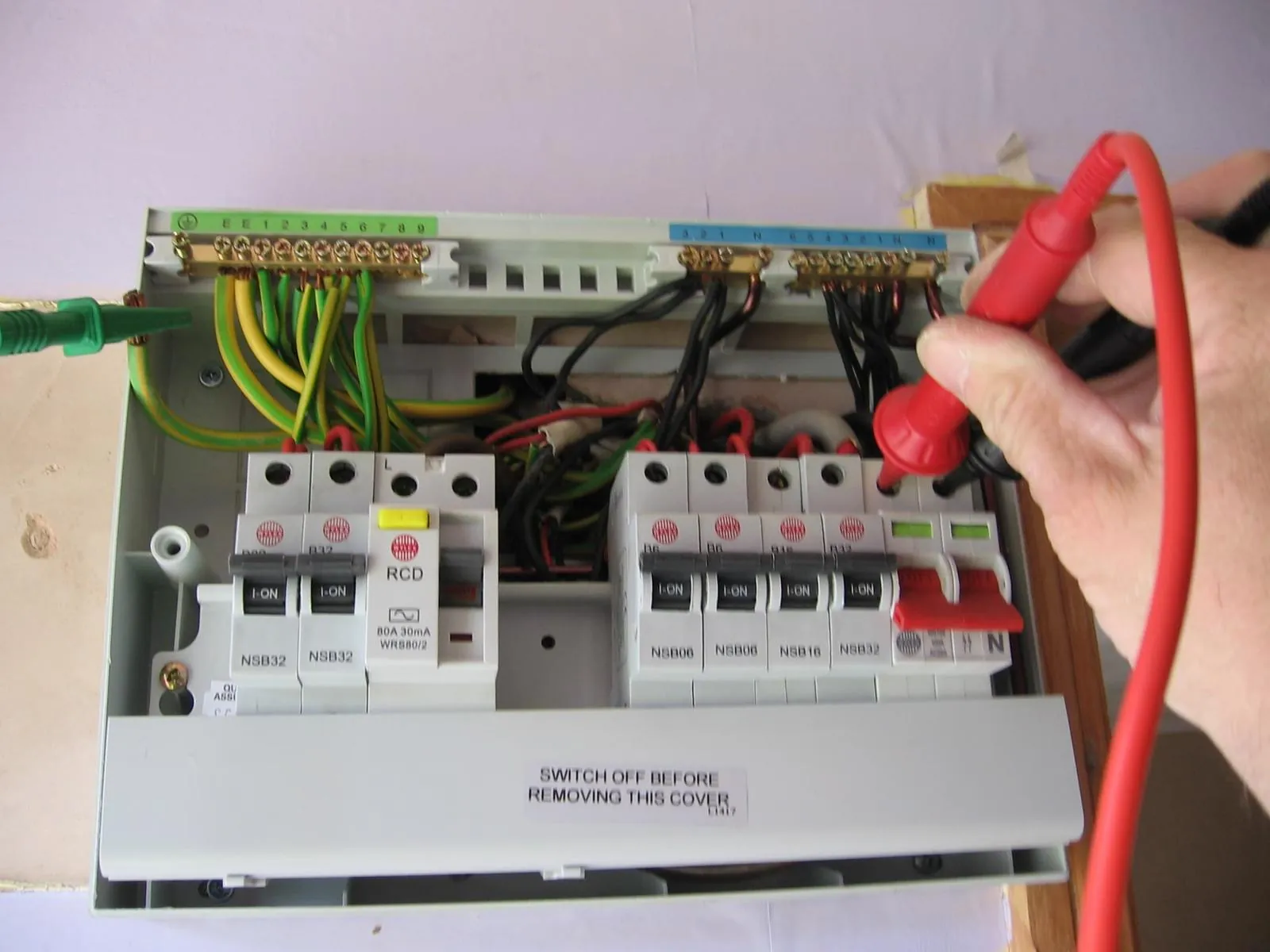
HMOs must have a modern consumer unit that meets the 18th Edition Wiring Regulations (BS 7671:2018). This means:
- A metal-clad consumer unit — plastic units are not compliant for new installations in domestic premises
- RCD protection for all circuits (via dual-RCD, RCBO, or AFDD boards)
- Clearly labelled circuits — each breaker must be identified so that isolation is quick and safe in an emergency
- Adequate spare ways for future circuits (fire alarms, additional sockets, etc.)
What do council inspectors look for?
When a council inspector from Newham, Tower Hamlets, Hackney, Redbridge, Waltham Forest or another East London borough visits your HMO, the electrical checks typically include:
- Current, satisfactory EICR certificate on site
- Mains-wired interlinked fire alarms tested and in working order
- Emergency lighting (where required) functional and certified
- Minimum socket numbers met in each room
- Consumer unit modern, metal-clad and properly labelled
- No evidence of DIY electrical work, overloaded sockets, or damaged wiring
- All electrical works completed under a Part P certificate
How we help HMO landlords in East London
We work with HMO landlords across all East London boroughs to ensure their properties are fully compliant. Our typical HMO package includes:
- Full EICR inspection — same-day certificate issue available (+£40)
- Mains-wired interlinked smoke and heat alarm installation
- Emergency lighting installation and annual test certification
- Consumer unit upgrade where required
- Additional socket and lighting circuits
- All Part P certification and paperwork provided
We can co-ordinate the full electrical compliance package for your licence application or renewal, often completing all required work in a single visit for smaller properties.