
Your consumer unit — commonly called the fuse board or fuse box — is the heart of your home’s electrical system. It’s where the electricity supply enters and is distributed to all the circuits in your property. If yours is old, full, or failing, replacing it is one of the most important electrical jobs you can have done. Here’s what you need to know.
What is a consumer unit?
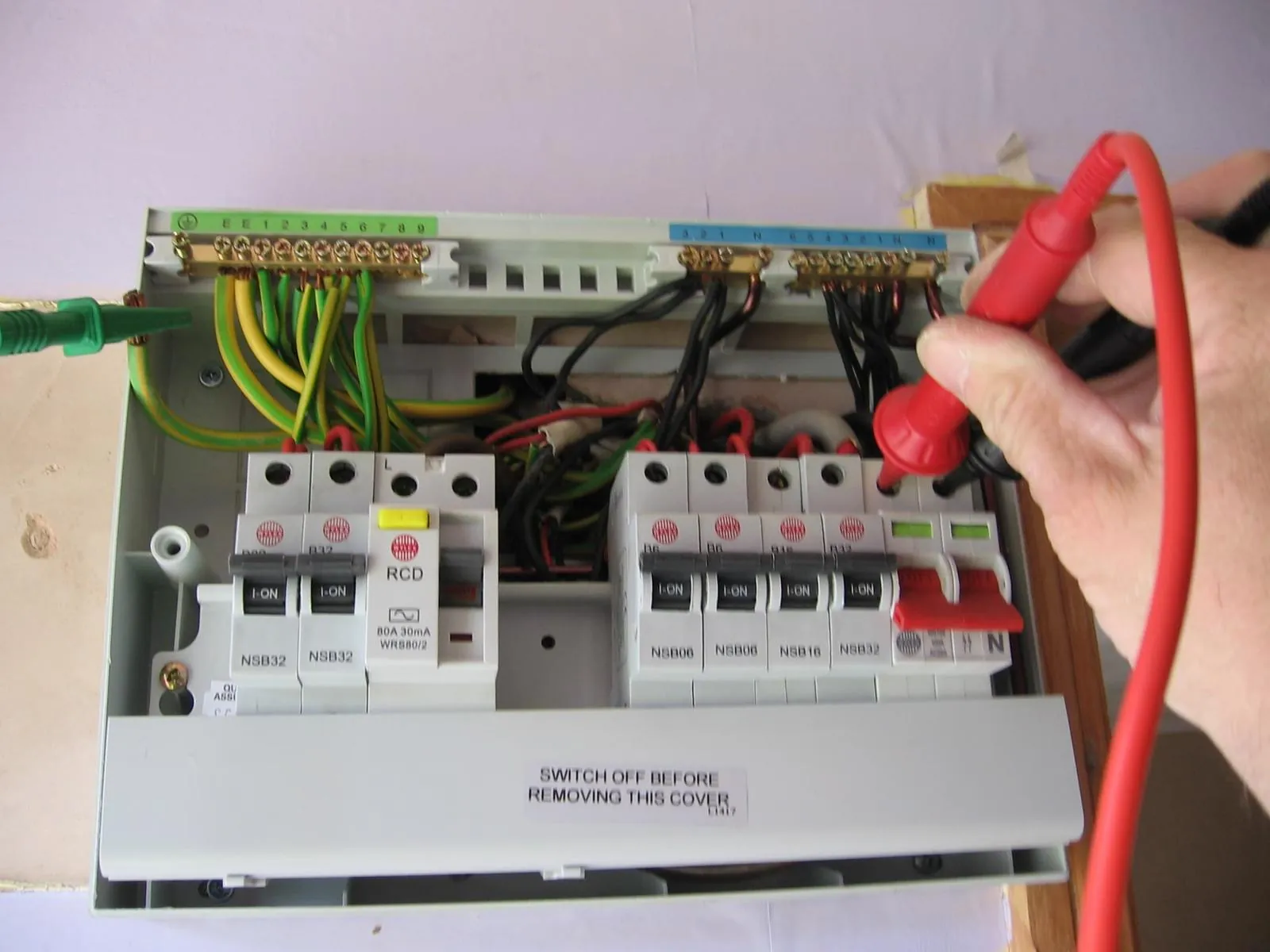
A consumer unit is the metal or plastic enclosure that contains your main switch, circuit breakers (MCBs), and residual current devices (RCDs). Every circuit in your home — sockets, lighting, cooker, shower, etc. — has its own breaker inside the consumer unit. When a fault or overload occurs, the relevant breaker trips to cut the power and protect the wiring.
Older properties may still have a fuse box with rewirable fuses or cartridge fuses rather than modern MCBs. These offer significantly less protection and are increasingly flagged as code C2 (potentially dangerous) on EICR reports.
When do you need a consumer unit upgrade?
The most common reasons we replace consumer units in East London are:
- Old rewirable or cartridge fuse board — if you still have a fuse board where you replace a wire or cartridge when something trips, it needs replacing. These predate modern circuit breaker technology and cannot provide the protection that modern wiring regulations require.
- No RCD protection — the 18th Edition of the IET Wiring Regulations (BS 7671:2018) requires RCD protection for most circuits in a domestic property. Many older consumer units lack this. An EICR will typically flag the absence of RCDs as a C2 observation.
- EICR remedial requirement — if your EICR report has identified the consumer unit as unsatisfactory, landlords are legally required to have dangerous defects put right within 28 days. There is no legal bar on selling, but an unsatisfactory report will usually be raised in the buyer’s survey.
- Adding circuits — if your current consumer unit is full and you want to add circuits for an EV charger, garden room, extension or kitchen refit, you’ll need a larger unit or second consumer unit.
- Installing an EV charger — most EV charger installers require a modern dual-RCD consumer unit to be in place before installing a home charge point.
- Selling your home — buyers' solicitors and surveyors increasingly flag old fuse boards. Upgrading before you list can prevent delays and price reductions.
- Burning smell or persistent tripping — if breakers trip repeatedly or you can smell burning from the fuse board area, treat this as urgent and call us immediately.
What does a consumer unit upgrade involve?
Replacing a consumer unit is notifiable electrical work under Part P of the Building Regulations. This means it must be carried out by a qualified electrician who is registered with a government-authorised scheme and can self-certify the work, or it must be notified to and inspected by your local Building Control department.
The process involves:
- Isolating the supply at the electricity meter (the Distribution Network Operator meter, which requires a DNO cut-out seal)
- Removing the old consumer unit and labelling all existing circuits
- Installing the new consumer unit — typically a dual-RCD or RCBO consumer unit to comply with the 18th Edition Wiring Regulations
- Reconnecting all circuits and testing each one with calibrated test equipment
- Issuing an Electrical Installation Certificate (EIC) — this is the legal completion document for the work
- Notifying the work to Building Control (your electrician should handle this automatically)
What type of consumer unit will be installed?
We install metal-clad consumer units to comply with the requirement introduced in the 18th Edition Wiring Regulations for consumer units in domestic premises to be housed in a non-combustible enclosure. Plastic consumer units are no longer compliant for new installations in residential settings.
Inside the unit, we typically install:
- RCBO (Residual Current Breaker with Overcurrent) units — these combine the function of an MCB and RCD in a single device per circuit, providing the best possible protection and meaning that a fault on one circuit does not trip other circuits. This is our preferred approach.
- Dual RCD split-load units — a more economical option where two RCDs each protect half the circuits. Less flexible but perfectly compliant.
How long does a consumer unit replacement take?
For a typical 3-bedroom house in East London, allow 4–6 hours. A flat with fewer circuits can be done in 3–4 hours. We’ll confirm before we start. You will be without power for the majority of this time while the work is carried out.
How much does a consumer unit upgrade cost in London?
Our pricing for consumer unit replacement in East London:
- Flat (up to 6 circuits): from £595
- Houses, larger properties and RCBO boards: quoted individually — call for a fixed written price
The price includes all materials (consumer unit, MCBs/RCBOs, tails, earth block), labour, full testing, and the Electrical Installation Certificate. There are no hidden extras. If we find additional remedial work is needed once we open things up, we’ll tell you before proceeding.
Do I need a new consumer unit when I sell my house?
You’re not legally required to replace a consumer unit before selling, but in practice an old fuse board will be flagged in your buyer’s survey and may be raised as a condition of sale. Having a modern consumer unit with a current EIC removes this risk entirely and can prevent last-minute negotiations or delays.
If you already have an EICR (for example from a landlord inspection), the buyer’s solicitor may use this as evidence of the installation’s condition. If the EICR flagged the consumer unit as C2, having it replaced before the sale goes through removes a potential sticking point.
Areas we cover for consumer unit upgrades
We carry out consumer unit replacements across East and South East London from our base in the Royal Docks (E16):