

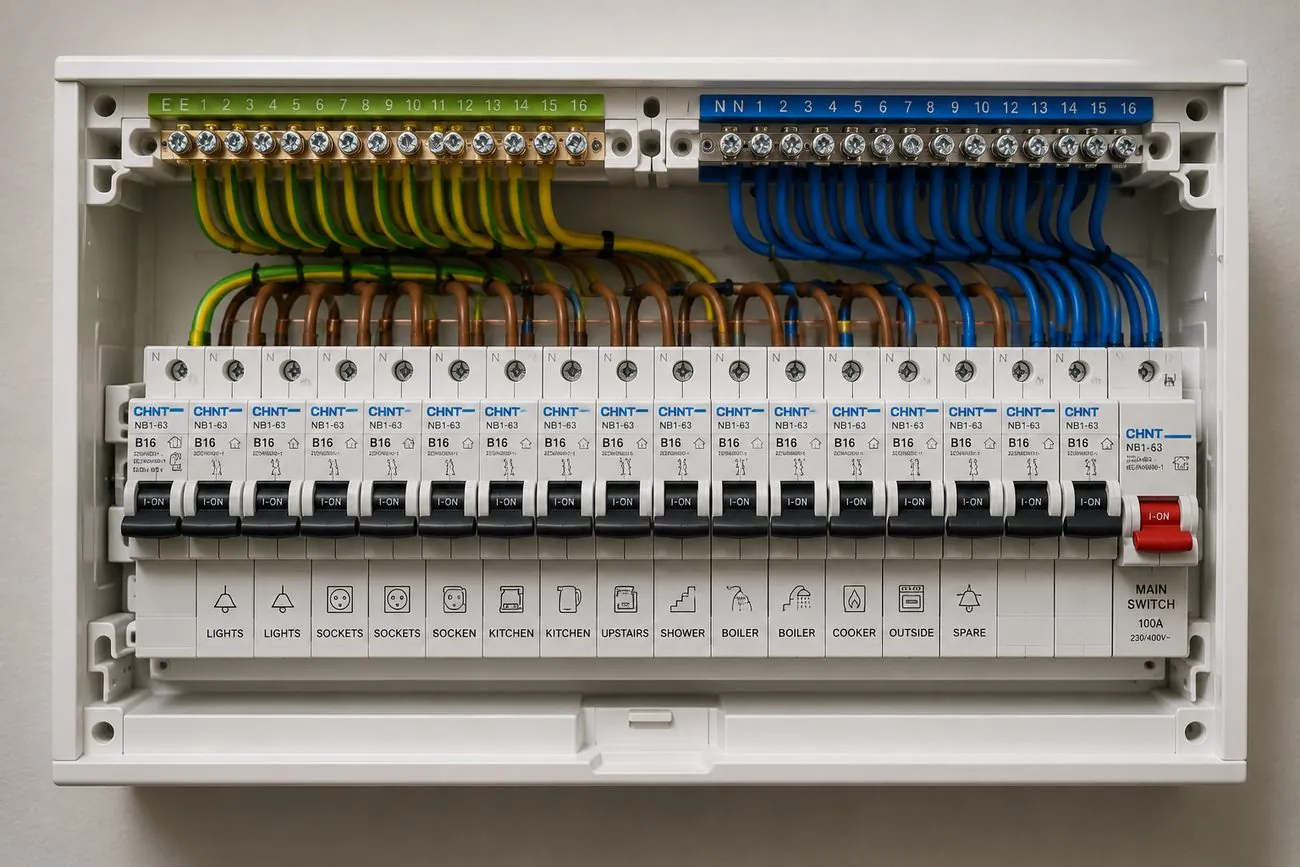
Electrical faults cause thousands of house fires in the UK every year — and most are preventable. Here’s what to watch for.
The common causes
- Overloaded sockets and extension leads — too much drawn through one outlet, or daisy-chained leads.
- Loose connections — a loose terminal arcs and generates heat, often behind a socket or in the fuse board.
- Old or damaged wiring — deteriorated insulation and old fuse boards with no RCD.
- Faulty appliances — and damaged cables or chargers.
- Poor DIY work — untested, non-compliant connections.
The warning signs
A burning smell, scorch marks, warm sockets, flickering lights or a buzzing fuse board all deserve immediate attention — see our guides on burning smells and a buzzing consumer unit.
How to prevent them
- Have an EICR to check the installation is safe.
- Make sure you have RCD protection — upgrade an old consumer unit if not.
- Don’t overload sockets, and avoid permanent extension leads.
- Replace damaged cables and faulty appliances promptly.
Common questions
Electrical faults cause a significant share of UK house fires every year — and the majority are preventable with basic checks and up-to-date protection like RCDs.
Overloaded circuits and loose connections that arc and generate heat are among the most common causes, along with old wiring and faulty appliances.
Have an EICR, make sure you have RCD protection, don’t overload sockets or rely on permanent extension leads, and replace damaged cables and faulty appliances promptly.
Worried about electrical safety?
An EICR gives you peace of mind — book a fixed-price inspection today.
Call 020 7473 7807