

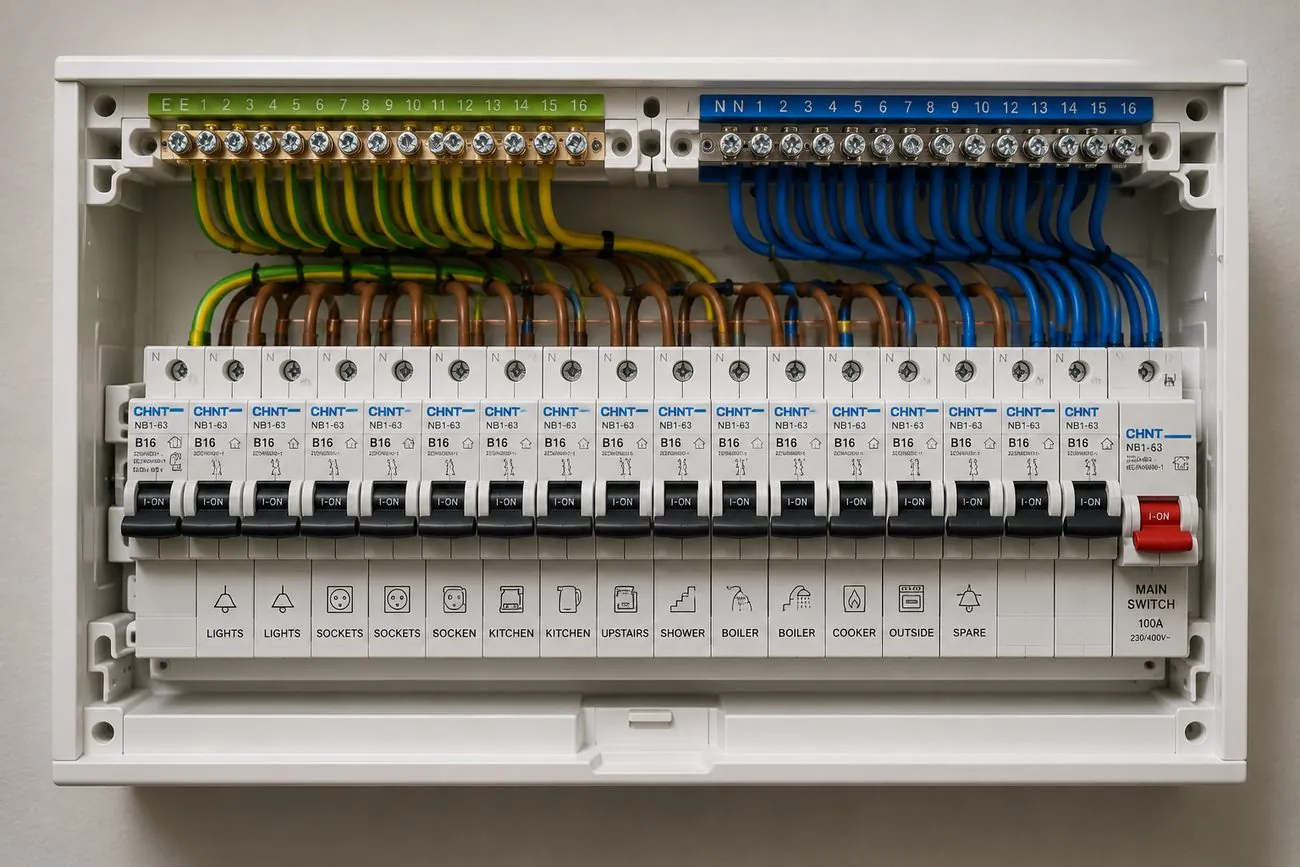
If you’ve had electrical work quoted or carried out in your home, you may have heard the term ‘Part P’. It’s an important part of keeping your home safe and legal — here’s what it means and why it matters.
What is Part P?
Part P is the section of the Building Regulations (in England and Wales) that covers electrical safety in homes. Introduced in 2005, it exists to reduce deaths, injuries and fires caused by faulty domestic electrical work. In short, it requires that electrical installation work in a home is designed and installed safely.
What work is ‘notifiable’?
Certain jobs are ‘notifiable’, meaning building control must be told about them. These include:
- Installing a new circuit (for example a cooker, shower or EV charger)
- Replacing a consumer unit (fuse board)
- Electrical work in a special location such as a bathroom or outdoors
Smaller jobs like adding a socket to an existing circuit are generally non-notifiable — but they still have to comply with the wiring regulations (BS 7671).
Why using a registered electrician matters
A registered electrician can self-certify notifiable work and notify building control on your behalf, issuing you an Electrical Installation Certificate and a compliance certificate. If the work is done by someone not registered, you’d have to pay building control to inspect and approve it separately — slower and more expensive.
What happens if work isn’t compliant?
Non-compliant electrical work can be dangerous, invalidate your home insurance, and cause problems when you sell — buyers’ solicitors routinely ask for electrical certificates. In the worst cases, a local authority can require unsafe work to be removed or redone.
How we keep you compliant
All work carried out by Royal Docks Electrical is completed to BS 7671 (18th Edition) standards, certified, and where notifiable, registered with building control. You get the paperwork you need for your records, insurer or future sale — backed by our 3-year workmanship guarantee. See our residential services or get in touch.
Common questions
Notifiable work — such as a new circuit, a consumer unit replacement, or work in a bathroom or outdoors — must be notified to building control. A registered electrician can do this for you and issue the certificates.
Adding or replacing a socket on an existing circuit is generally non-notifiable, but it still has to comply with the wiring regulations. Work in special locations like bathrooms is notifiable.
Yes — we provide an Electrical Installation Certificate or Minor Works Certificate, and notify building control for any notifiable jobs, so you have full documentation.
Need compliant, certified electrical work?
All work to BS 7671, certified and notified where required — backed by our 3-year workmanship guarantee.
Call 020 7473 7807