

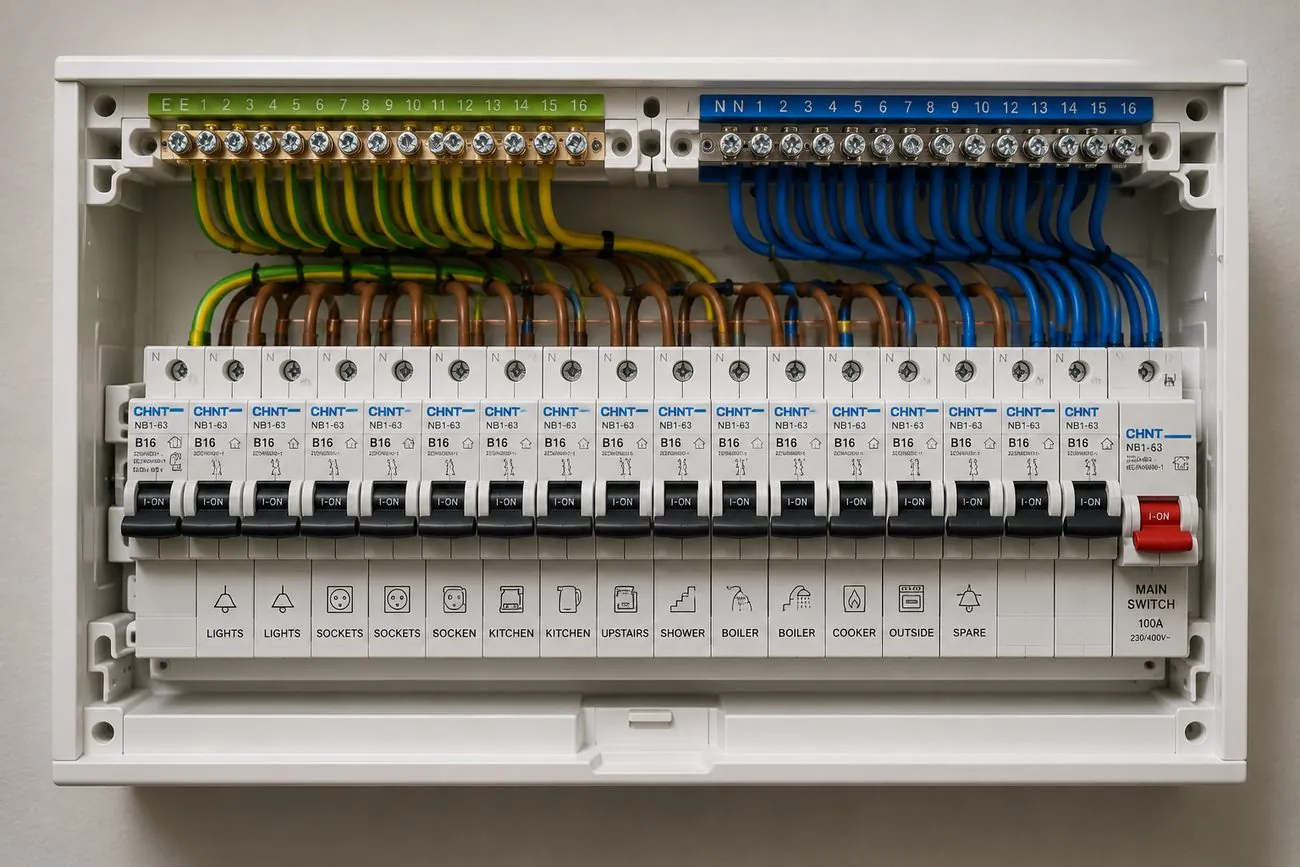
If your EICR comes back marked unsatisfactory, don’t panic. It’s common, especially in older London properties, and it’s a clear list of what to put right. Here’s the process.
Why a report fails
An EICR is unsatisfactory if it contains any C1 (danger present), C2 (potentially dangerous) or FI (further investigation) codes. C3 (improvement recommended) codes are advisory and do not fail the report. For a full breakdown, see our guide to EICR codes explained.
What you must do
- Get the flagged items repaired. If you’re a landlord, that’s within 28 days of the report (or sooner if specified).
- Obtain written confirmation that the work is complete.
- Provide that confirmation to your tenant and, if requested, the local authority.
The remedial process
Your electrician quotes for the remedial work, carries it out, and re-issues a satisfactory certificate. Minor items can often be fixed on the same visit as the inspection. We handle both the EICR and the remedial work, so you don’t need a second contractor.
Will you need a rewire?
Rarely. Most unsatisfactory reports are resolved with targeted repairs — a new consumer unit, additional RCD protection, or fixing a specific fault. A full rewire is only needed if the installation is genuinely end-of-life.
Common questions
No. C3 is an advisory ‘improvement recommended’ code. Only C1, C2 and FI codes make a report unsatisfactory. A report can be satisfactory with C3 items present.
Landlords must complete remedial work for C1, C2 or FI codes within 28 days of the report (or sooner if specified) and confirm completion in writing.
Usually not. Most unsatisfactory reports are resolved with targeted repairs. A full rewire is only needed when the installation is genuinely at the end of its life.
Got an unsatisfactory EICR?
We’ll quote and carry out the remedial work and issue your satisfactory certificate.
Call 020 7473 7807