

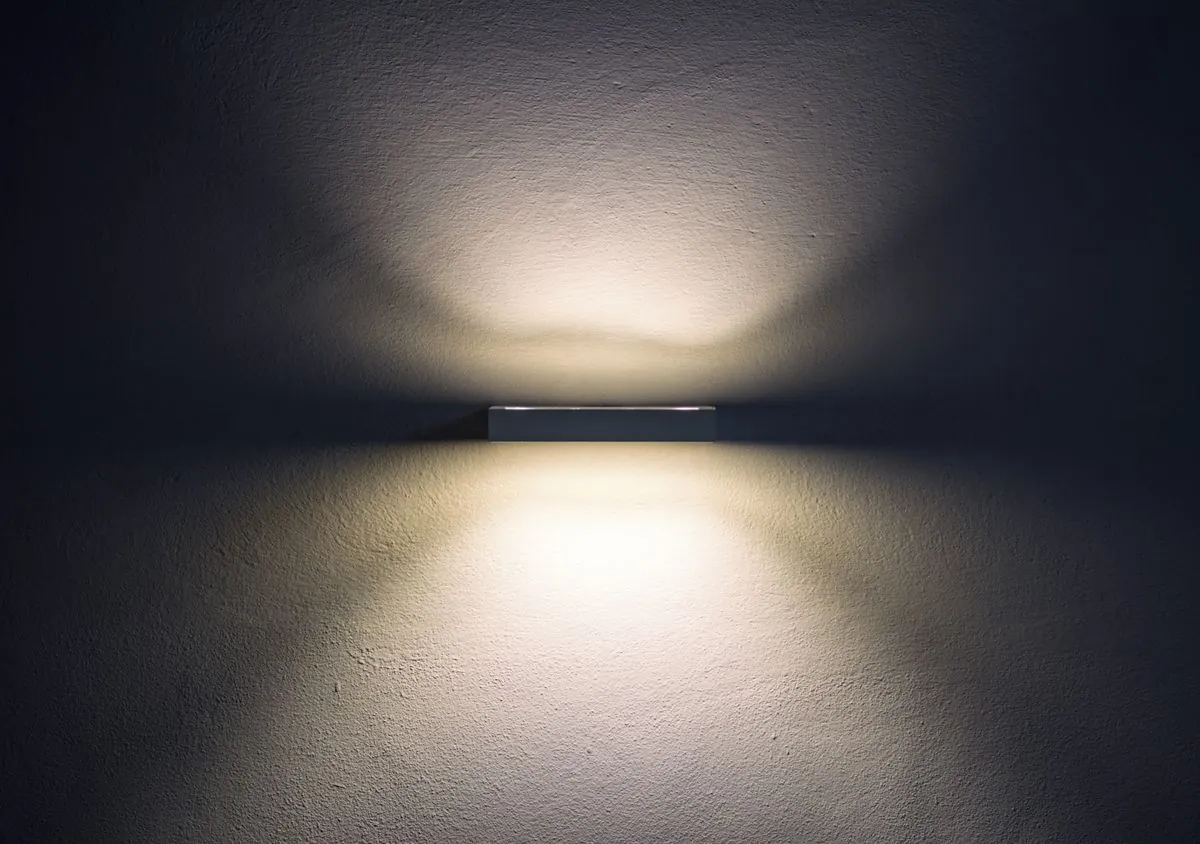
The difference between a room that feels flat and one that feels warm and inviting is usually the lighting design. Here’s how to plan it properly.
Think in three layers
- Ambient — the general background light (downlights, ceiling fittings).
- Task — focused light where you do things (kitchen worktops, a reading nook, a desk).
- Accent — light that adds mood and highlights features (wall lights, LED strips, spots on artwork).
A good room uses all three, on separate switches or zones so you can set the mood.
Avoid the ‘grid of downlights’ mistake
Filling a ceiling with evenly spaced downlights lights the floor, not the room, and feels clinical. Place downlights where light is useful — over worktops, seating and circulation — and add wall or feature lighting for warmth.
Get the colour temperature right
Warm white (around 2700K–3000K) suits living rooms and bedrooms; cooler white suits kitchens, bathrooms and workspaces. Keep it consistent within a room.
Dimming and control
Dimmable LEDs on the right dimmer let one room do several jobs. We supply compatible dimmers so there’s no flicker or buzz. See our LED lighting service — we’ll design and install it for you.
Common questions
It depends on the room and where light is useful — not a fixed grid. We place downlights over worktops, seating and circulation, and add wall or accent lighting rather than filling the ceiling.
Warm white (about 2700K–3000K) suits living rooms and bedrooms; cooler white suits kitchens, bathrooms and workspaces. Keep the colour temperature consistent within a room.
Yes — with dimmable LEDs and a compatible dimmer. We supply and fit the right dimmer so your LEDs dim smoothly without flicker or buzz.
Planning a lighting scheme?
We design and install layered LED lighting that transforms a room.
Call 020 7473 7807